

In today’s diverse industries, the utilization of temporary masking materials is essential in safeguarding surfaces throughout various processing stages. These materials serve as transient barriers, shielding components from potential damage and ensuring sleek finishes. A critical criterion in selecting such masking materials lies in their ease of removal post-processing, leaving no traces on the surface. Let’s delve into the intricacies of temporary masking, exploring its significance across industries and optimal solutions to address the challenges it encounters in the article below.
1/ The functions of temporary masking

Temporary masking plays a pivotal role in various industries, such as automotive, aerospace, electronics, medical, or machinery by providing protection, precision, and efficiency during manufacturing, finishing, and maintenance processes. Masking materials offer better protection under different processes requiring high temperature resistance (e.g. machining, lapping, polishing) or excellent chemical resistance (e.g. electroplating, chemical etching, acid stripping, painting, coating, anodizing,)
‘With successful research and testing projects, Prostech’s technical team has developed the best temporary masking materials to address the challenges encountered in various manufacturing processes across different industries. Contact us now and click on this article to receive the most detailed solutions for temporary masking.’
2/ Types of Traditional masking materials and their drawbacks
a/ Liquid lacquers
which easy to apply and cover complex areas but:
- Mostly flammable liquid because of solvent base
- Low viscosity that requires several coating layers for better protection
- Take hours to cure.

b/ Wax
Wax is perhaps the most economical option but:
- It needs to melt to form liquid masking, requiring preheating equipment. In the case of masking internal cavities, the parts to be masked require pre-heat to allow proper flow of wax.
- It is hard to remove and needs to be heated, scrap, or trim
- Some may be made from chlorinated formulations, posing an odor and toxicity problem.
c/ Boots, Plugs, Cap
Typically made of Rubber or vinyl, that are used in high volume processing of components without dimensional variation.
- Different shapes require different molds/designs and it is suitable only for external protection.
- Only suited for long runs because of high engineering and design costs with high MOQ

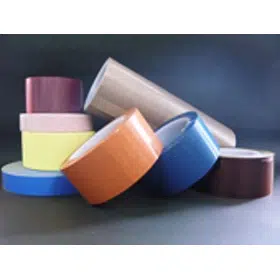
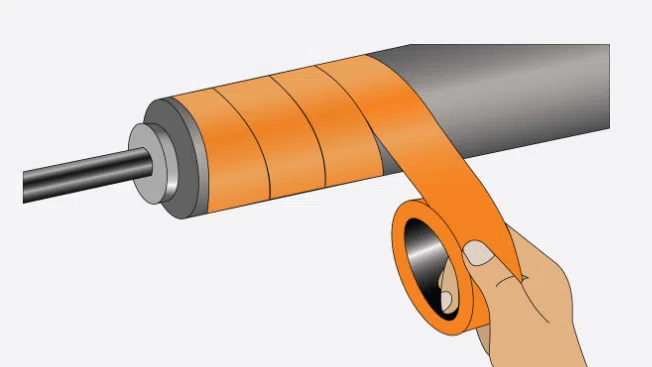
d/ Masking tape
Masking tape is well-known thanks to the simple and low-cost cost and easy process for the operator. It also can adapt to different conditions: high temperature, acidic, basic,…. However
- It will be the most labor-intensive masking process, especially for complex areas.
- It can be easy to tear down or affected by abrasion or wear under process.

3/The Prostech’s solutions to address the challenges faced by temporary masking
To figure out those challenges of the traditional masking methods, Prostech offers different types of materials: UV masking, Latex rubber masking/solder mask, or hotmelt masking.
a/ UV masking
UV masking is a solvent-free, low-odor, non-flammable liquid resin. Although it requires a UV curing machine, It is very versatile thanks to:
– Cure on-demand ability
– 1-component, ready to use
– Can be automated and cover complicated shapes/areas/cavities.
– Different types are specialized for various conditions: high heat, acid/alkali, and coating/painting resistance.
Prostech offers 4 main types of UV masking supporting for 4 removal methods:
- Peelable
Peelable masking is the most well-liked grade that has high adhesion to different substrates but is easy to take off by either manually lifting an edge or using a gentle tool, followed by pulling the mask away.
PT934-2 UV/Visible light-curable masking resin is formulated to provide good surface protection during chemical milling/ etching, plating, anodizing, and aggressive grit-blasting operations. It aids the manufacture, overhaul, repair, and rework of turbine engine blades, vanes, and other turbine components. Click on the product below to access detailed information about it
|
Removable UV Masking Adhesive PT934-2 Good Chemical Resistance |

|
This type of UV masking is formulated with a water-soluble polymer which will be hydrolyzed underwater, normally hot water 800C. In some cases, room-temperature running water also helps to release the masking layer with the help of brushing. This system is commonly found in the surface finishing process.
- Heat- soluble
The masking layer can detach from the surface by heating up at high temperature (e.g 1100C) within a short time (5 – 10 minutes). This material is suitable for processes with chemical such as acid/alkali soaking tests. However, a heat-sensitive product might suffer safety risks under this type of removal.
- Burn-off
This grade of maskant provides the best surface adhesion and great resistance to harsh conditions. This 100% organic resin cures quickly by proper UV energy exposure and is easily removed by incineration at a minimum 5000C which is suitable for chemical process, machining, or finishing processes.
‘Prostech provides the SpeedMask 706 UV light curable masking resin line, which is an ideal product for providing excellent surface and cavity protection during acid stripping and air plasma spray operations. Click on the product below to access detailed information about it..’

|
b/ Latex rubber masking
Latex rubber masking or normally called as Solder mask: is used in electronic manufacturing to protect a certain area of a printed circuit board (PCB) while soldering, and it can be readily removed by peeling or washing once soldering is finished. It offers many benefits:
- More flexibility compared to Kapton tapes or boot, particularly, dispensable either manually or automatically.
- Can be used as a fixing material to protect sensitive components such as connectors, switches, SMDs,…
- Soft, rubbery to avoid breakage when removing.
- Excellent heat and chemical resistance, can be a temporary barrier for conformal coating, powder coating, painting, reflow, wave soldering, anodizing and plating.
Prostech offers products to address the challenges of temporary masking. Explore detailed information about Prostech’s products with just a simple click on the items below:
| Chemask CM8 | |

|

|
c/ Hotmelt masking
Hotmelt Masking is an olefin hybrid adhesive specialized for excellent high-temperature resistance. Hotmelt masking offers:
- Fast curing within seconds without external energy required
- Better inventory thanks to initial solid form at room temperature
- Remove cleanly after processing.
- Silicone-free reduces the potential for silicone contamination that can interfere with subsequent bonding or conformal coating process

|
‘In the process of PCB manufacturing, the use of temporary masking materials is extremely crucial in every stage to achieve the final perfected circuit board. Let’s delve into this issue in detail through our article with just a simple click.’
CONCLUSION
In conclusion, understanding the significance of temporary masking and implementing effective solutions is crucial in navigating the complexities of modern industrial processes. By addressing challenges head-on with innovative masking materials and techniques, businesses can enhance efficiency, protect surfaces, and ensure high-quality outcomes. Explore comprehensive solutions of Prostech to optimize your temporary masking processes and elevate your operations to new heights.