

Roller cleaning labor hours on a PE extrusion coating line are driven less by how often a roller needs cleaning and more by how long each cleaning cycle takes. A roller wrap that supports one-piece removal and leaves no adhesive residue, such as PTFE Roller Wrap Tape, turns a scrape-and-solvent job into a strip-and-replace job — cutting the time per cycle, not just the frequency.
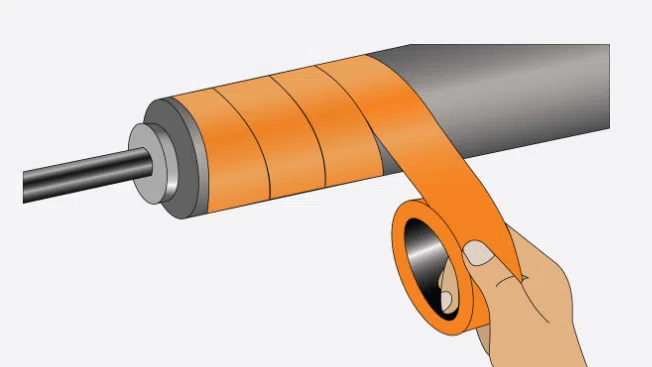
For process and R&D engineers evaluating roller wrap materials, maintenance labor is usually assessed as a frequency problem: how often does the roller need attention. But on lines already fitted with a PTFE-faced nip roller wrap, the more consequential variable is what happens during each cleaning event — because that’s where labor hours actually accumulate.
Why Cleaning Time Per Cycle Matters More Than Cleaning Frequency
A roller wrap that resists PE buildup already reduces how often intervention is needed. But every wrap eventually reaches end of life — through wear, a nick, or scheduled replacement — and that event still requires taking the line down. The question that determines total labor hours over a production year is: how long does that one event take?
If the wrap tears on removal, leaves adhesive residue that needs solvent and scraping, or requires re-cleaning the underlying roller surface before a new wrap can be applied, a single changeover can extend well beyond the time it takes to simply wrap a new tape. Multiply that difference by every changeover across every roller on the line, and the gap in annual labor hours becomes significant — even if two products claim the same “temperature rating” or “release performance” on their data sheets.
The Two Properties That Actually Drive This: Tensile Strength and Adhesive Formulation
Tensile Strength of PTFE Roller Wrap Tape Enables One-Piece Removal
Tensilized PTFE film — PTFE mechanically stretched and oriented before coating — has meaningfully higher tensile strength than standard as-skived PTFE film. In practical terms, this means the wrap can be pulled off in a single continuous piece rather than tearing into fragments that each need to be located and removed individually. One-piece removal is not a cosmetic detail; it is the difference between a two-minute strip and a ten-minute pick-and-scrape.
Here are some PTFE film with high tensile strength for your reference:
- DeWAL DW204-5HD Silicone PTFE Film Tape, Brown
- DeWAL DW204-2HD 1K Silicone PTFE Tape, Brown
- DeWAL DW204-3HD 1K Silicone PTFE Film, Brown
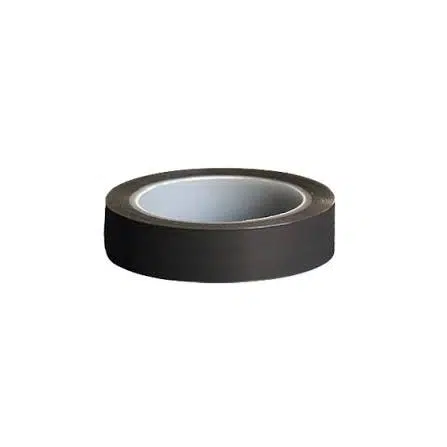
Silicone Adhesive Formulation of PTFE Roller Wrap Tape Determines Residue Behavior
What’s left behind on the roller after removal is a function of the adhesive, not the backing. A high-temperature silicone pressure-sensitive adhesive formulated for clean release will separate from the roller substrate without leaving a tacky film that requires solvent wiping. Adhesive residue left behind isn’t just an extra step — it can also become the seed point for the next contamination cycle if it’s not fully removed before the next wrap goes on.
Here are some PTFE film with incredible adhesion for your reference:
- DeWAL DW204-3HD 1K Silicone PTFE Film, Brown
- DeWAL DW664 Pressure Sensitive PTFE Film Tape, Orange
- DeWAL DW204-5HD Silicone PTFE Film Tape, Brown
Reference Data Points Relevant to Changeover Time
| Property | What it affects during changeover |
|---|---|
| Tensilized PTFE backing (higher tensile strength & elongation vs. standard PTFE film) | Enables removal in one continuous piece instead of fragmenting |
| High-temperature silicone adhesive, formulated for clean release | Residue-free removal — no solvent cleaning step required before rewrap |
| Cycling performance rated for extended use | Fewer changeover events per production run on continuous, long-run lines |
| Adhesion range across grades: 335–480 g/cm (typical, ASTM D1000) | Grade selection affects how firmly the wrap holds through the run — balance against ease of eventual removal |
Contact us to receive free technical advice on your specific application!
Selecting a Grade Without Trading Away Removal Ease
It’s worth noting explicitly: higher adhesion is not automatically the better choice for reducing labor hours. A grade selected purely for maximum adhesion, without weighing tensile strength and elongation, can hold more securely during the run but resist clean, one-piece removal at changeover — shifting time from “during production” to “during maintenance” rather than eliminating it. The grade that minimizes total labor hours is the one matched to your specific roller diameter, wrap tension, and expected run length — not the one with the highest number on a single spec line.
Frequently Asked Questions about PTFE Roller Wrap Tape
Does reducing PE contamination automatically reduce maintenance labor hours?
It reduces how often intervention is needed, but not necessarily how long each intervention takes. Labor hours are the product of frequency and duration — a wrap material also needs to support fast, clean removal to reduce the duration side of that equation.
What makes one-piece removal possible on a roller wrap tape?
Tensile strength and elongation of the PTFE backing. A tensilized PTFE film, mechanically stretched and oriented before adhesive coating, holds together under the tension of removal rather than tearing into fragments.
Why does adhesive residue matter if the roller is being rewrapped anyway?
Residue left on the roller substrate has to be removed — typically with solvent and manual scraping — before a new wrap can be applied cleanly. Skipping this step risks trapping residue under the new wrap, which can affect adhesion and become a future contamination point.
Want the full technical data sheet to evaluate grade selection for your line’s roller diameter and run length? Contact Prostech’s technical team.