

- The Mechanism of PTFE Tape: Surface Energy, Not Surface Smoothness
- What a Tensilized PTFE Film Tape Adds to the Roller
- How the Adhesive Layer Supports the Non-Stick Surface
- Reference Data Points
- Does the Same Mechanism Apply Beyond Polyethylene?
- Where This Applies — and Where to Verify First
- Frequently Asked Questions
Molten polyethylene bonds to a nip roller because most engineering surfaces have enough surface energy for PE to wet and adhere to them on contact. A PTFE tape eliminates PE contamination at the surface-chemistry level: PTFE’s surface energy (roughly 18–20 dyn/cm) is below the threshold PE needs to wet a surface, so the melt releases cleanly instead of building up pass after pass, making PTFE tape the standard material for non-stick applications.
For material engineers running PE extrusion coating or lamination lines, roller contamination isn’t a maintenance footnote — it’s a recurring source of laminate surface defects, unplanned stops, and rework. Understanding why it happens, and what actually interrupts it, matters more than knowing it’s “a problem.”
Source: DeWAL – Rogers Corperation
The Mechanism of PTFE Tape: Surface Energy, Not Surface Smoothness
It’s a common assumption that a smoother roller surface resists sticking better. In practice, adhesion at the nip point is governed by surface energy, not surface finish. Molten PE has a relatively high surface energy compared to fluoropolymers, and it will wet and bond to bare metal, rubber, or most coated surfaces regardless of how polished they are — because those surfaces still present enough energy for the melt to adhere on contact.
PTFE is different. Its extremely low surface energy means molten PE doesn’t wet it under normal process conditions. There’s no bonding mechanism for the melt to grab onto, so instead of layering up on the roller, it releases as the roller rotates through the nip. This is the same underlying property that allows PTFE tape eliminate PE contamination, becoming the standard material for mold release and non-stick applications across manufacturing.
What a Tensilized PTFE Film Tape Adds to the Roller
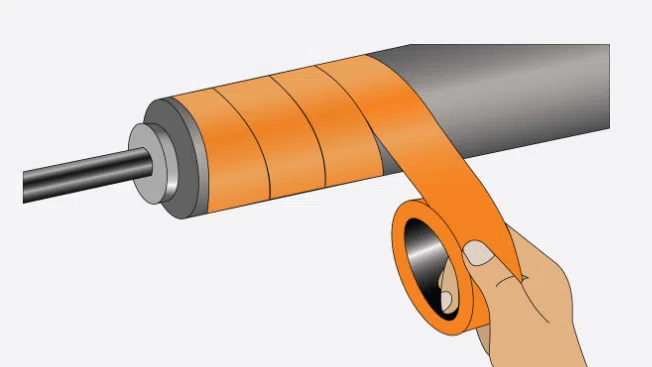
Wrapping a roller in PTFE film tape alone is not new. What differentiates a purpose-built roller wrap tape is the film’s mechanical preparation. A tensilized PTFE backing — PTFE film tape that has been mechanically stretched and oriented rather than left in its as-skived state — carries a meaningfully higher tensile strength and elongation along the draw direction than standard PTFE film tape.
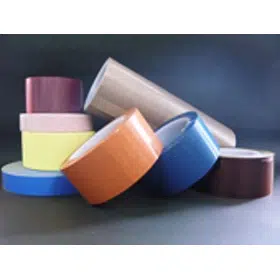
Here are some high quality PTFE film tape which can eliminate PE contamination, recommended by our technical engineers for roller wrap applications:
- DeWAL DW204-2HD 1K Silicone PTFE Tape, Brown
- DeWAL DW204-3HD 1K Silicone PTFE Film, Brown
- DeWAL DW204-5HD Silicone PTFE Film Tape, Brown
- DeWAL DW662 1K Silicone PTFE Tape, Blue
- DeWAL DW664 Pressure Sensitive PTFE Film Tape, Orange

Source: DeWAL – Rogers Corperation
This matters directly at the point of application. A roller wrap goes on under tension, needs to hold that tension through continuous rotation cycles, and — when it’s time to replace — should come off cleanly rather than shredding into fragments that get left behind in the wrap seam. A backing that isn’t engineered for this mechanical load is more likely to develop micro-tears at the seam or edges over time, and any breach in the PTFE surface reopens a contact point where PE can start bonding directly to the substrate underneath it.
How the Adhesive Layer Supports the Non-Stick Surface
The backing does the release work, but the adhesive layer determines whether that release surface stays intact and in place through the process. High-temperature silicone pressure-sensitive adhesive is the standard choice here — not by convention, but because it’s one of the few adhesive chemistries that holds tack and bond integrity at sustained elevated temperature without softening, migrating, or breaking down into residue that could itself become a contamination source at the nip.
The combination is what makes the difference: a low-surface-energy backing that PE cannot wet, held in place by an adhesive that doesn’t fail under the thermal load the backing is designed to withstand.
Reference Data Points
| Property | Typical value | Why it matters for contamination control |
|---|---|---|
| Backing | Tensilized PTFE film | Low surface energy prevents PE wetting; tensilizing resists tearing under wrap tension |
| Adhesive | High-temperature silicone PSA | Maintains bond integrity at sustained elevated temperature; residue-free removal |
| Continuous temperature rating | Up to 260°C (500°F) | Defines the process temperature envelope the release surface is validated for |
| Certification | UL File No. E179854 (flame retardant / cold resistant, select grades) | Third-party verified reference point for compliance documentation |
Does the Same Mechanism Apply Beyond Polyethylene?
The release mechanism described here — PTFE’s surface energy sitting below what a material needs to wet and bond — is not chemistry specific to polyethylene. It’s a general property of the PTFE surface itself. On that basis, the same non-stick behavior would be expected to extend to other tacky process materials that build up on rollers, such as adhesives or inks encountered in laminating and coating operations. That said, this is a mechanism-based expectation, not a claim backed by product-specific test data for adhesive or ink contamination — the manufacturer’s published performance data for this tape series covers polyethylene lamination specifically. If your process involves buildup from a material other than PE, this is worth confirming directly rather than assuming coverage.
Where This Applies — and Where to Verify First
This construction is suited to nip roller wrapping in PE laminate production, including lamination of heavier substrates run on a continuous basis. The release mechanism itself — low surface energy preventing PE wetting — holds regardless of line speed or substrate. What varies by line is the thermal exposure at different points of roller contact, which is why the continuous-use rating (up to 260°C) is the number to check against your actual process conditions before specifying a grade, rather than assuming any PTFE tape covers any PE process.
If you are looking for an UL Certified for flame retardant and cold resistant properties or pressure sensitive film tapes, contact Prostech for recommendations and technical advice on your exact application.
Frequently Asked Questions
Does a PTFE roller wrap eliminate PE contamination completely, or just reduce it?
The release mechanism is a physical property of PTFE’s surface energy, not a coating that wears off with use — as long as the PTFE surface remains intact and within its rated temperature range, PE does not bond to it. Contamination reappears only if the surface is physically breached (tears, seam failure) or the process exceeds the tape’s validated temperature range at the contact point.
Is standard PTFE film tape the same as a tensilized PTFE roller wrap tape?
No. Standard as-skived PTFE film has lower tensile strength and elongation than tensilized PTFE film. For a roller wrap application under continuous tension and cycling, this mechanical difference affects how long the wrap holds its integrity before requiring replacement.
Is this tape suitable for zones where the roller sees continuous direct melt contact above 260°C?
Continuous-use rating for this construction is up to 260°C. For contact zones where actual measured surface temperature — not die or melt temperature — exceeds that threshold, this should be confirmed against the current technical data sheet before specifying, rather than assumed.
Considering PTFE roller wrap for a specific line? We can provide the full technical data sheet and discuss grade selection against your process conditions — contact Prostech’s technical team.