

- 1. Why Rubber Is Difficult to Bond
- 2. Surface Preparation for Rubber Bonding
- 3. Surface Preparation Decision Tree
- 4. Adhesive Selection by Rubber Type
- 5. Bonding Rubber to Other Substrates
- Adhesive Comparison Table: Rubber Type vs. Recommended Adhesive
- 6. Troubleshooting Common Rubber Bonding Problems
- Frequently Asked Questions
Rubber bonding is one of the most demanding adhesive challenges in industrial manufacturing. Unlike metals or rigid plastics, rubber substrates are highly elastic, often have low surface energy, and may contain plasticizers or mold-release agents that actively resist adhesion. Selecting the wrong adhesive — even a high-strength one — results in premature bond failure, delamination, or assembly rework.
This guide covers the most effective adhesive technologies for bonding rubber, organized by rubber type, substrate combination, and application environment.
1. Why Rubber Is Difficult to Bond
Before selecting an adhesive, it helps to understand what makes rubber challenging:
Low surface energy: Rubbers such as EPDM and silicone have very low surface energy (typically below 30 mN/m), which prevents most adhesives from wetting and anchoring properly. This is the primary reason standard cyanoacrylates fail on EPDM without a primer.
Plasticizer migration: Rubbers including NBR, SBR, and some EPDM compounds contain plasticizers that migrate to the surface over time. These oils contaminate the bond interface, causing progressive adhesion loss even after an initially strong bond.
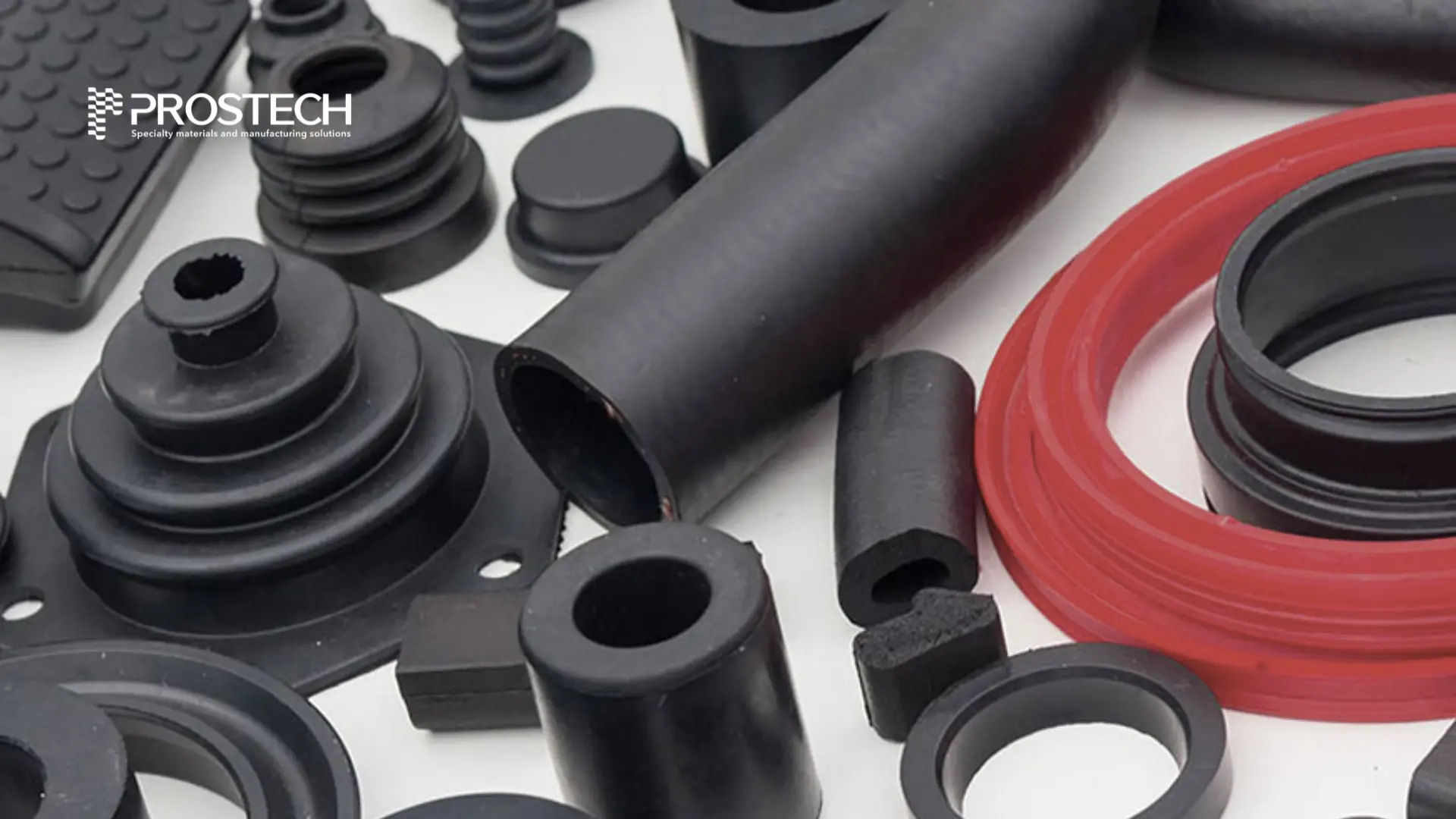
Flexible substrates under dynamic load: Rubber joints in gaskets, seals, and vibration dampeners are constantly flexing. A rigid adhesive that cannot deform with the substrate will crack and fail under peel or impact loads — even if its tensile strength looks acceptable on paper.
Varied cure chemistry compatibility: Some adhesive chemistries (particularly tin-catalyzed silicones) are inhibited by sulfur compounds present in natural rubber and some synthetic rubbers.
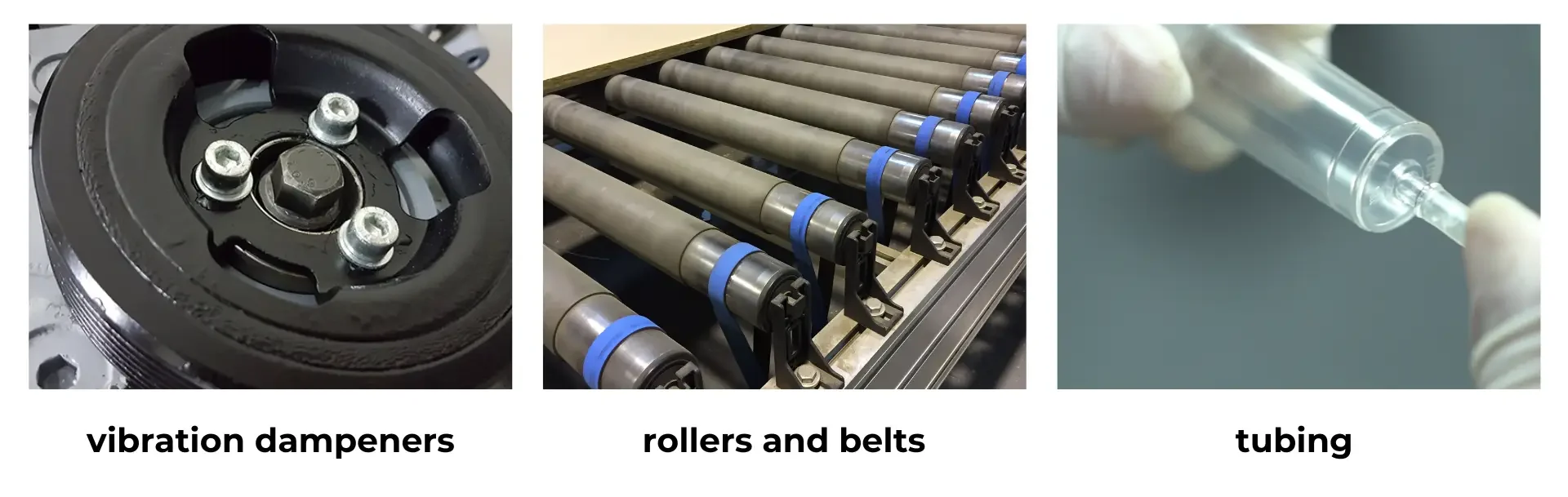
For instance, in the automotive sector, rubber bonding is critical for making seals, gaskets, and vibration dampeners. In industrial machinery, it ensures the durability of rollers and belts. Medical devices often rely on bonded rubber for flexible tubing or protective covers. Bonding rubber is also crucial in consumer goods, such as footwear and electronics, where durability and functionality are key.
2. Surface Preparation for Rubber Bonding
No adhesive compensates for inadequate surface preparation. Standard protocol:
- Degrease. Wipe both surfaces with isopropanol (IPA). Do not use acetone — it is too aggressive for many rubber types and can cause surface swelling or damage.
- Abrade. Lightly scuff the rubber with fine-grit sandpaper (240–400 grit) to mechanically increase the bonding area and expose a fresh, uncontaminated surface layer.
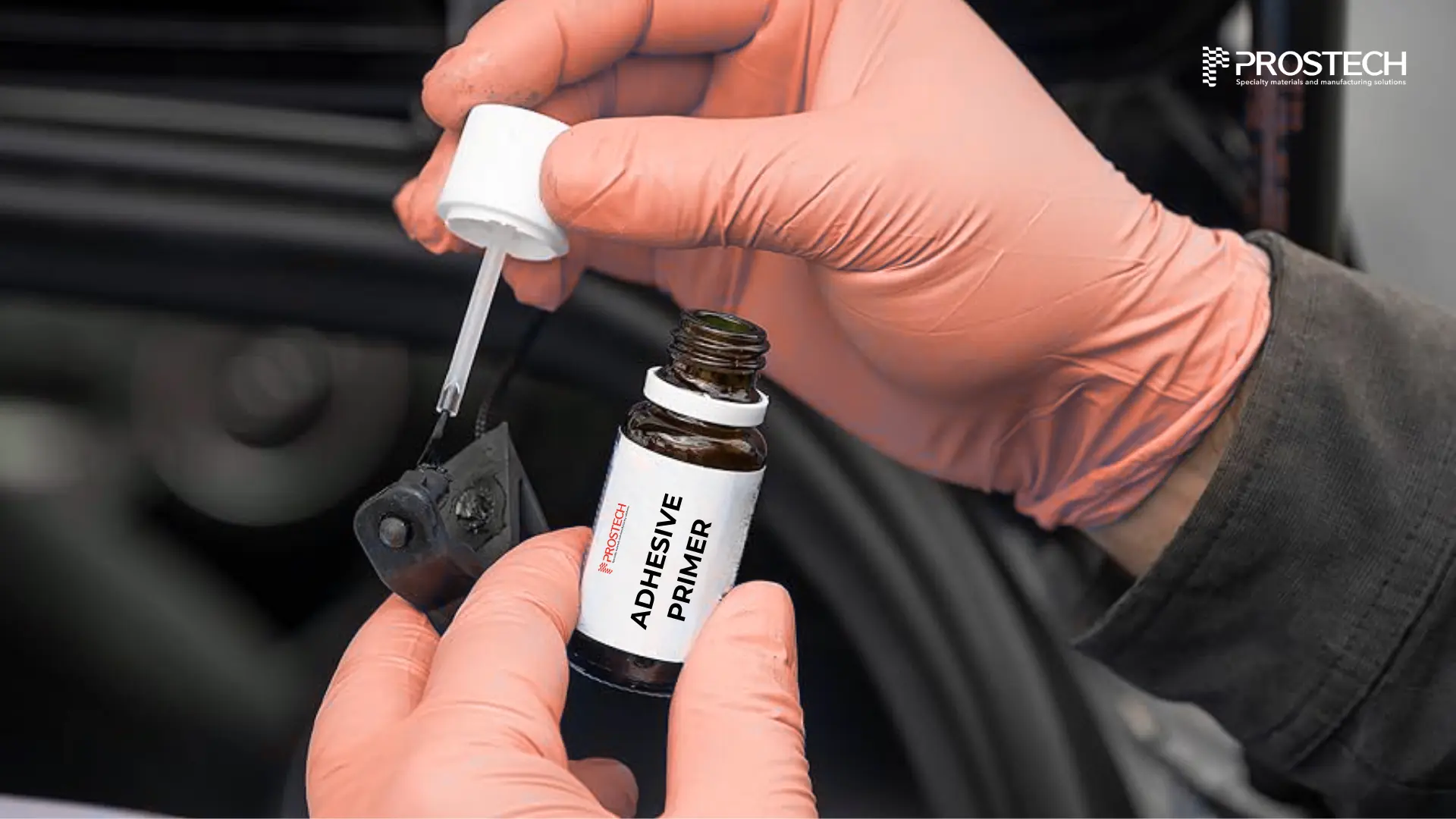
- Prime when required. Low-surface-energy rubbers — particularly silicone rubber, EPDM, and fluoroelastomers (Viton) — require a dedicated primer or activator to achieve reliable bond strength. Skipping the primer on these substrates is the single most common cause of rubber bond failure.
- Bond immediately. After surface preparation, bond within 30 minutes. Prolonged exposure to ambient air allows contaminants and plasticizers to re-migrate to the surface.
Related article: How to bond Hard-to-bond Substrates (Nylon, COC/COP and PEBA) in Medical Devices Assembly?

3. Surface Preparation Decision Tree
Step 1 — Identify the rubber type. Check the component datasheet, material marking, or contact the part manufacturer. The rubber type is the single most important variable in adhesive selection.
Step 2 — Classify surface energy.
- High SE (NR, NBR, neoprene, PUR): standard adhesive, IPA wipe usually sufficient
- Low SE (EPDM, silicone, Viton, PP/PE substrates): primer required before bonding with CA; structural acrylic preferred for structural joints
Step 3 — Define mechanical requirements.
- Fast assembly, small joint, no gap: cyanoacrylate
- Structural bond, peel/impact loads, outdoor exposure: structural acrylic
- Temperature resistance >150°C, flexibility, chemical resistance: silicone RTV
Step 4 — Check compatibility with mating substrate. For rubber-to-metal, rubber-to-plastic, or rubber-to-glass joints, the adhesive must adhere to both substrates. Not all adhesives that bond rubber also bond metals (and vice versa).
4. Adhesive Selection by Rubber Type
4.1. Natural Rubber (NR) and Nitrile Rubber (NBR)
Natural rubber and NBR are among the easiest rubber types to bond. Their relatively higher surface energy and stable surface chemistry make them compatible with most cyanoacrylate formulations.
Recommended Adhesive: Cyanoacrylate (instant adhesive)
Standard ethyl cyanoacrylates bond well to NR and NBR, typically achieving fixture time under 60 seconds with no primer required. For assemblies subject to impact, vibration, or peel loads — such as NBR O-ring installation into metal housings — a rubber-toughened cyanoacrylate is preferable to a standard formula, as it provides higher flexibility and peel strength.
Limitations to keep in mind: standard cyanoacrylates have a functional gap-fill capability below 0.5 mm. They are not suitable for joints with visible gaps or uneven mating surfaces.
Product Recommendation: 3M™ Scotch-Weld™ PR100 Plastic & Rubber Instant Adhesive Purpose-formulated for difficult rubber substrates. Provides fast handling strength (<20 seconds) and strong, durable bonds on NBR, EPDM, Santoprene, ABS, and heavily plasticized PVC. For EPDM and LSE plastics, use with appropriate primer for full performance.
4.2. EPDM Rubber
EPDM (ethylene propylene diene monomer) is one of the most widely used industrial rubbers — found in automotive door seals, roofing membranes, HVAC gaskets, and outdoor-exposure components. It is also one of the most difficult to bond, due to its saturated polymer backbone and very low surface energy.
Recommended Adhesives: Structural acrylic (MMA) or Specialty Cyanoacrylate with primer
Structural acrylic adhesives (two-part methacrylate) are the preferred solution for EPDM in high-load or environmental-exposure applications. They provide a longer open time (typically 3–10 minutes depending on grade) allowing for part alignment, and offer excellent resistance to moisture, UV, and thermal cycling after cure. Two-part acrylics also tolerate slightly contaminated surfaces better than cyanoacrylates.
Specialty cyanoacrylates formulated for LSE substrates — such as 3M PR100 — can bond EPDM when used with an appropriate activator/primer, making them a viable option for high-volume assembly where speed is critical.
What does not work on EPDM: Standard cyanoacrylates without primer produce virtually no adhesion to EPDM. Standard silicone adhesives are not typically used as structural adhesives for EPDM.
4.3. Silicone Rubber
Silicone rubber presents a unique bonding challenge: it is chemically inert, extremely low in surface energy, and the silicone polymer itself interferes with the cure mechanism of many adhesive types. In addition, tin-condensation silicone RTV adhesives can be inhibited by sulfur and other compounds present in natural rubber — a critical cross-substrate consideration.
Recommended Adhesives: Silicone Adhesive/Sealant (1K RTV)
When bonding silicone rubber to itself or to non-silicone substrates (metals, ceramics, glass), a one-component RTV silicone adhesive sealant is the most reliable choice. These products cure by reaction with atmospheric moisture to form a flexible elastomeric bond that remains stable from −60°C to over 200°C. They do not embrittle over time and are inherently UV, chemical, and moisture resistant.
For difficult substrates where a primer is needed, Momentive’s SS4155 Primer promotes adhesion for Momentive RTV silicone systems on metals and plastics.
Product Recommendation:
- Momentive RTV108 — One-component, acetoxy-cure (acetic acid by-product), general-purpose silicone adhesive sealant. Adheres to metals, ceramics, glass, and many plastics without primer. Service temperature: −65°C to +204°C continuous, up to +260°C short-term. Standard viscosity for vertical and overhead surfaces.
- Momentive TSE3941W — Fast-curing one-component silicone adhesive sealant. Excellent corrosion-free adhesion to copper, metals, and plastics. Suited for electronics assembly where rapid line speed is required.
- Momentive RTV159 — High-strength one-component silicone adhesive sealant for applications requiring elevated mechanical performance alongside high-temperature resistance.
Important note on Cyanoacrylates + Silicone rubber: Cyanoacrylate adhesives can bond silicone rubber, but only with the use of a dedicated silicone primer/activator. Without primer, adhesion to Silicone rubber is negligible. Even with primer, the bond line flexibility will be lower than a Silicone-based adhesive.
4.4. Butyl Rubber (IIR)
Butyl rubber is used in applications requiring excellent air and gas impermeability — inner tubes, pharmaceutical stoppers, and roofing membranes. It has low surface energy and is generally considered difficult to bond.
Recommended Adhesive: Cyanoacrylate (rubber-toughened) or Neoprene-based Contact Adhesive
Standard cyanoacrylates provide moderate adhesion to butyl rubber. For structural joints, a rubber-toughened formulation is preferable. Solvent-based neoprene contact adhesives, common in traditional rubber bonding, remain a practical option for high-peel-strength requirements on large surface areas.
Polyurethane Rubber (PUR)
Polyurethane rubber, used in rollers, wheels, and impact-absorbing components, bonds readily to many adhesive types due to its relatively higher surface energy compared to EPDM or silicone.
Recommended Adhesive: Cyanoacrylate or Structural Acrylic
Both cyanoacrylate and two-part acrylic adhesives provide good adhesion to PUR without special surface treatment beyond standard degreasing. For flexible polyurethane foam bonding, contact adhesives or structural acrylics are generally preferred over rigid CA formulations.
5. Bonding Rubber to Other Substrates
5.1. Rubber to Metal
Rubber-to-metal bonding is one of the most common industrial requirements: attaching rubber vibration mounts to steel frames, bonding rubber seals into aluminum housings, and affixing rubber protective covers to metal machinery.
The key challenge is the extreme difference in mechanical properties — metal is rigid and non-deformable, while rubber is elastic. Any adhesive in this joint must accommodate differential thermal expansion and resist peel forces generated when the rubber flexes.
- Cyanoacrylates provide fast, strong initial bonds on rubber-to-metal joints and are practical for small assemblies, O-ring installation, and precision parts where gap fill is not required. Rubber-toughened grades tolerate vibration and impact significantly better than standard formulations. Use with primer for metals that are oxide-covered or difficult to bond.
- Structural Acrylics and flexible Epoxies are preferred for structural rubber-to-metal joints exposed to dynamic loading, outdoor weathering, or elevated temperatures. Their longer open time allows proper part alignment, and their toughened bond lines resist peel and impact forces.
What to avoid: Standard rigid epoxies (without toughening agents) produce brittle bond lines that crack at the rubber interface under cyclic flex or impact. They should not be used as the primary adhesive on flexible rubber-to-metal joints unless the rubber substrate is constrained and the joint is primarily in compression.
Prostech product: 3M™ Scotch-Weld™ PR100 — suitable for rubber-to-metal joints where fast assembly speed is required and gap fill is not a constraint.
5.2. Rubber to Plastic
The primary consideration when bonding rubber to plastic is the surface energy of the plastic substrate. Polypropylene (PP), polyethylene (PE), and PTFE — often found alongside rubber in assemblies — have very low surface energy and typically require either a primer or a specialty adhesive formulated for LSE substrates.
Recommended Adhesive: Structural Acrylics (for structural bonds on LSE plastics + rubber) or Specialty Cyanoacrylates with activator. 3M PR100 is specifically designed for this combination, including difficult-to-bond pairings such as EPDM-to-polypropylene.
5.3. Rubber to Glass
Silicone adhesive sealants are the standard solution for rubber-to-glass bonding, providing durable, UV-resistant bonds with good flexibility. Momentive RTV108 and TSE3941W bond to glass without primer under most conditions.
For applications requiring structural strength on glass substrates, two-part acrylic or epoxy adhesives may be considered, with appropriate glass primer.
Adhesive Comparison Table: Rubber Type vs. Recommended Adhesive
| Rubber Type | Cyanoacrylate (standard) | Cyanoacrylate (toughened/LSE) | Silicone RTV | Structural Acrylic | Notes |
|---|---|---|---|---|---|
| Natural rubber (NR) | ✓ Good | ✓ Best | – | ✓ Good | No primer typically needed |
| Nitrile rubber (NBR) | ✓ Good | ✓ Best | – | ✓ Good | Watch for plasticizer migration |
| EPDM | ✗ Poor (no primer) | ✓ With primer | – | ✓ Best | Primer essential for CA |
| Silicone rubber | ✗ Poor (no primer) | ✓ With primer | ✓ Best | – | Silicone-to-silicone: use RTV |
| Butyl rubber (IIR) | ○ Moderate | ✓ Good | – | ✓ Good | Low SE; prep required |
| Polyurethane rubber | ✓ Good | ✓ Good | – | ✓ Good | Relatively easy to bond |
| Neoprene (CR) | ✓ Good | ✓ Good | – | ✓ Good | Standard CA works well |
| Viton / FKM | ✗ Poor (no primer) | ✓ With primer | – | ○ With prep | Extremely low SE |
Key: ✓ = suitable, ○ = marginal/conditional, ✗ = not recommended
6. Troubleshooting Common Rubber Bonding Problems
Adhesive fails immediately or within 24 hours
Most likely cause: inadequate surface preparation. Mold-release agents, slip additives, and processing lubricants are invisible on the surface but completely prevent adhesion. Re-prepare the surface with IPA wipe and light abrasion, and bond within 30 minutes.
Bond is weak but not zero
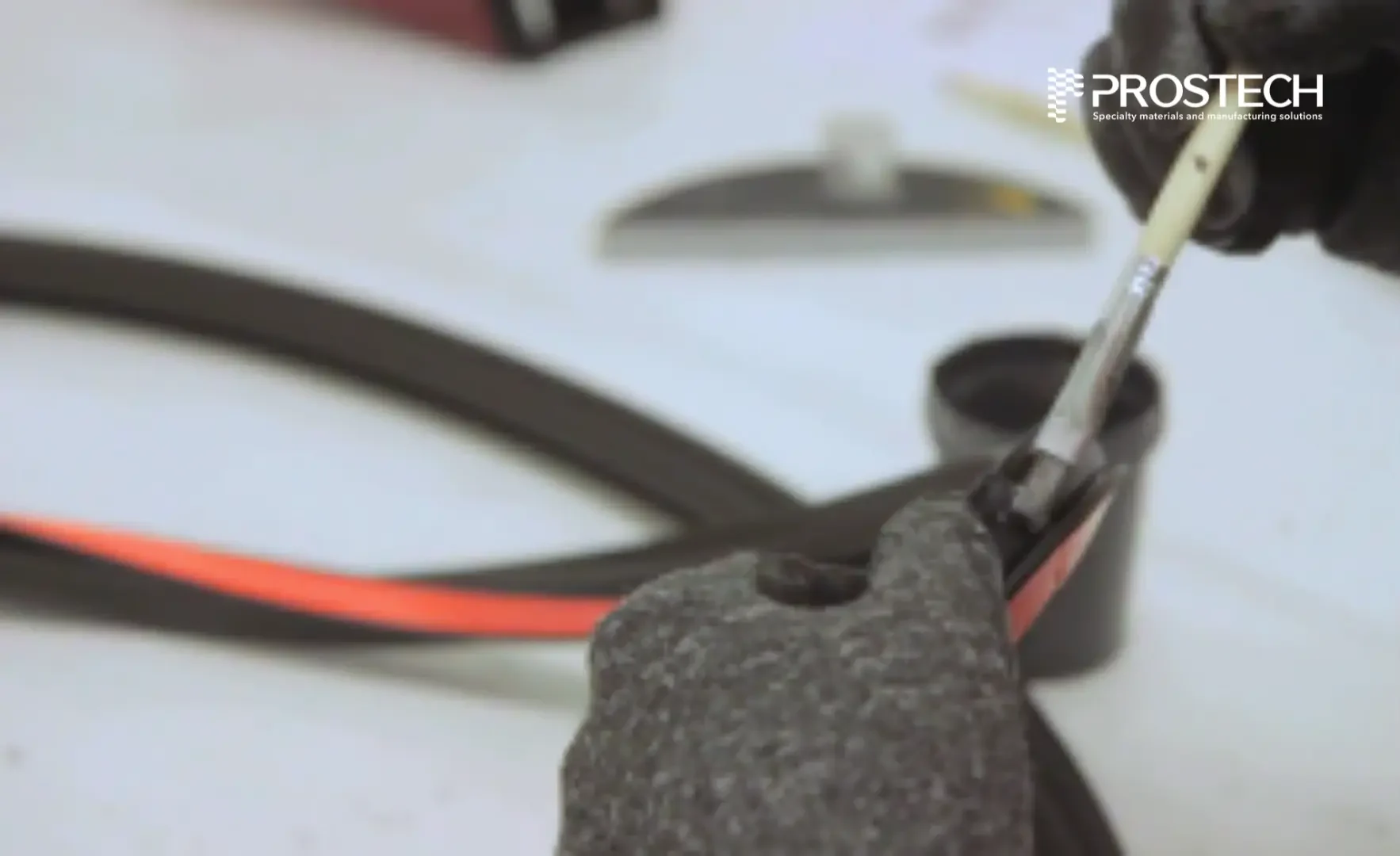
For EPDM or silicone substrates, this typically indicates that the adhesive was applied without a required primer. Primer chemically modifies the low-energy surface to allow proper wetting. Retest with appropriate primer.
Bond holds initially but fails after weeks of service
Plasticizer migration in NBR, SBR, or EPDM compounds can progressively contaminate the bond line. Select adhesives documented by the manufacturer as resistant to plasticizer migration, or use a structural acrylic system that forms a more mechanically interlocked bond.
Bond cracks under flex or vibration
A brittle bond line (common with standard cyanoacrylates or rigid epoxies) cannot flex with the rubber substrate. Switch to a rubber-toughened cyanoacrylate, flexible silicone adhesive, or structural acrylic depending on the application requirements.
White blooming or frosting around the bond line
A common characteristic of cyanoacrylate cure — accelerated by high humidity or poor ventilation. This is usually cosmetic rather than structural, but indicates cure occurred outside the bond gap. Reduce adhesive volume and ensure joint close-up before full cure. Controlled-atmosphere bonding stations eliminate this for production lines.
Frequently Asked Questions
What is the best adhesive for bonding rubber to rubber?
For most rubber types (NR, NBR, neoprene, polyurethane), a cyanoacrylate adhesive — specifically a rubber-toughened or hard-rubber grade — provides the fastest and most reliable rubber-to-rubber bond. For silicone-to-silicone bonding, a one-component RTV silicone adhesive such as Momentive RTV108 is the correct choice. For EPDM-to-EPDM structural bonds, a two-part structural acrylic with primer provides the best combination of strength and environmental durability.
What is the best adhesive for rubber to metal?
There is no single universal answer — it depends on the rubber type, metal, and application load. Cyanoacrylates are practical for small joints and fast assembly (3M PR100 for difficult rubbers). Structural acrylics are preferred for dynamic loading or outdoor exposure. Silicone adhesives should only be used for rubber-to-metal joints where flexibility and temperature resistance are the primary requirements, not structural load-bearing.
Can you use super glue on rubber?
Yes, for most rubber types. Standard super glue (cyanoacrylate) bonds well to natural rubber, NBR, neoprene, and polyurethane rubber. It does not bond well to EPDM, silicone rubber, or Viton without a primer. For any rubber joint subject to impact, flex, or vibration, use a rubber-toughened cyanoacrylate rather than standard super glue.
Does rubber bond require a primer?
It depends on the rubber type. Natural rubber, NBR, and neoprene typically do not require a primer for cyanoacrylate bonding. EPDM, silicone rubber, Viton, and LSE plastics require a primer when using cyanoacrylates. Structural acrylics are more tolerant and may not require a primer on EPDM if proper abrasion and degreasing are performed.
What adhesive works on EPDM rubber?
Two options: (1) a specialty cyanoacrylate such as 3M PR100 used with an appropriate LSE primer/activator, providing fast assembly speed; or (2) a two-part structural acrylic adhesive, providing longer open time, better gap fill, and superior environmental durability for demanding outdoor or automotive applications.
<!– ================================================================ HEAD BLOCK — paste into WordPressfor: https://prostech.vn/the-best-adhesives-for-bonding-rubber/ WHAT IS INCLUDED: 1. Canonical tag (absolute URL) 2. Hreflang (English + x-default) 3. JSON-LD @graph with 6 schema types: WebSite · Organization · TechArticle BreadcrumbList · FAQPage · ItemList (7 products) HOW TO DEPLOY — choose one method: METHOD A Yoast SEO (free) — per-post, no plugin needed Post edit → Yoast SEO metabox → Advanced tab → Canonical URL: https://prostech.vn/the-best-adhesives-for-bonding-rubber/ Then paste the