

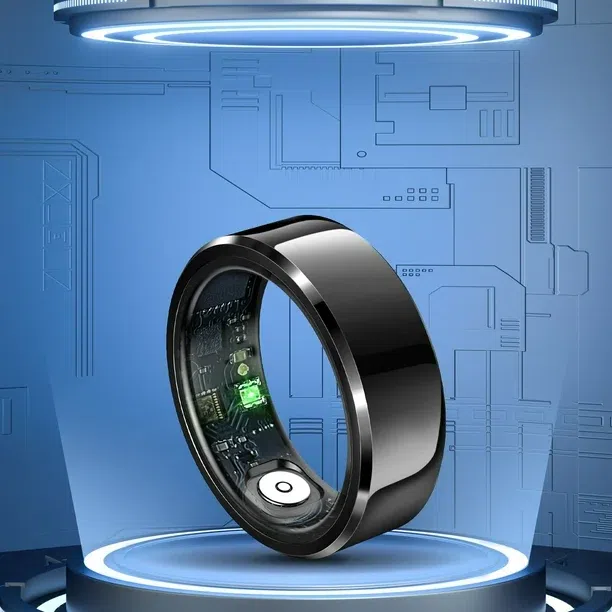
In the rapidly evolving landscape of Electronics Device manufacturing, the smart ring represents the pinnacle of miniaturization. As a result, a superior potting materials for advanced smart rings quality is required.

Source: Internet
As manufacturers push the boundaries of functionality, the limitations of traditional assembly materials have become the primary bottleneck in production scalability.
The critical difference lies in the potting materials for smart rings. A superior electronic potting solution is no longer just about protection; it is the defining factor for yield rates, optical performance, and user experience.
At Prostech, we understand that for B2B manufacturers, the choice of potting materials dictates the success of the final product. Therefore, we are pleased to introduce the latest potting materials that wipe out pretty much the challenges of potting for smart rings and revolutionize the electronic assemblies industry.
1. The Challenge: Why Traditional Potting Materials Fail in Smart Rings
Manufacturing smart rings is significantly more complex than standard electronics device potting. The internal volume is microscopic, the components are densely packed, and the device is regularly subjected to degradation factors, such as sweat, chemicals, UV light, etc.

Source: Internet
These lead to a unique “Micro-Encapsulation Paradox.”. Traditional potting compounds, which work perfectly for automotive or general industrial electronics devices, struggle in smart rings potting.
These materials are too viscous to penetrate the sub-millimeter gaps without high pressure. They cure too aggressively for delicate bio-sensors.
This fundamental incompatibility between material and design decreases not only the quality of smart rings but also the productivity of the manufacturing processes. Some significant issues include:
1.1. Bubble Formation in Potting
The most pervasive issue when it comes to potting materials for advanced smart rings quality is the entrapment of air bubbles.
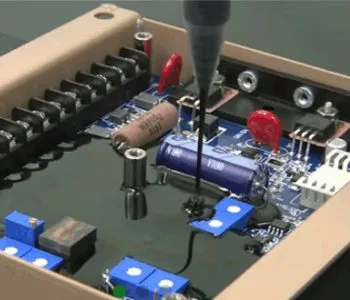
During the potting process, high-viscosity adhesives often fail to flow into the intricate undercuts and micro-gaps between the battery and the PCB.

Source: Prostech
Let’s think of the clear potting resin as the diamond of the smart ring. A trapped bubble acts like a cleavage. It instantly decreases the visual quality of the ring, making a high-quality wearable device look like a cheap, defective plastic toy.
Besides cosmetic defects; these trapped bubbles compromise the structural integrity of the ring and may interfere with sensor accuracy as well.
This explains why bubble formation remains a major problems during potting in mass production.
1.2. Yellowing in Potting
Many conventional materials are susceptible to UV degradation and chemical reactions. After aging and soaking in chemicals (such as hand sanitizers or cleaning agents), they turn yellow easily.

Source: Internet
Yellowing degradation acts as a physical and optical barrier. By increasing spectral absorption and internal scattering, it degrades the Signal-to-Noise Ratio (SNR), forcing the sensor to work harder for less accurate data.
Not to mention, discoloration tends to be associated with poor quality materials. It means the yellowing instantly destroys the premium feel of a high-tech device, and decreases its value for money.
1.3. The Curing Conflict in Potting: Speed vs. Sensitivity
How potting materials cure can largely affect the foundation for the smart ring.
Different potting materials require distinct curing methods. To optimize production throughput, manufacturers often apply heat to accelerate the chemical reaction and shorten curing times.
However, for sensitive devices, particularly smart rings with miniature components, excessive heat poses a significant risk of thermal damage. Consequently, achieving the perfect equilibrium between process efficiency and component integrity remains a formidable challenge for electronics manufacturers.
At Prostech, we deeply understand these challenges. As your dedicated solution provider, we specialize in bridging the gap between production efficiency and product quality.
Read on to discover our curated product recommendations. However, to ensure you select the optimal potting materials for advanced smart rings quality, please contact us for a detailed consultation.
2. The Solution: Advanced Potting Materials for Advanced Smart Rings
To address these specific manufacturing challenges, Prostech introduces three new ITW Potting Materials: Devcon EP8100HF, Devcon EP8500HF, and EXP.164-02-10.
Prostech is an authorized distributor of ITW. Contact us now for sample requests and product selection consultation.
2.1. Self-Degassing Capability of Potting Materials:

Source: ITW
The above line graph demonstrates a comparison in viscosity of part A and part B when temperature increases.
Part B (Stable Baseline): Exhibits complete thermal stability. Its viscosity remains consistently negligible across the entire temperature spectrum, showing no rheological sensitivity to heat. This allows the sealant to easily penetrate into small, complicated architecture and pushes air out of these gaps. This is the key to prevent air bubbles and create a smooth, aesthetically pleasing surface after potting.
Part A (Viscosity Collapse): Demonstrates a dramatic thermal response. While highly viscous at ambient conditions (approaching 10,000 cps at 15°C), the resin undergoes a rapid viscosity collapse upon heating. At the critical 50°C threshold, its flow resistance plummets to near-zero, perfectly aligning with Part B.
By combining an ultra-low viscosity range (200-500 cps) with a heat-responsive mechanism, this solution allows trapped air to be released from the most intricate micro-undercuts between the battery and PCB.
Contact our expert for a tailored technical solution for your business.
2.2. Low-Temp Cure Capability of Potting Materials:
Unlike traditional electronics adhesives, this two-component epoxy one achieves full cross-linking density at a low heat of 60°C. This gentle curing mechanism not only prevents thermal shock damage to delicate bio-sensors during the potting process, but also speeds up the reaction process between the two parts, thereby increasing production efficiency.
This undoubtedly provides a more reliable solution for devices with sensitive electronic components as smart rings.
2.3. Permanent Optical Signal Integrity of Potting Materials:
With >99% transmittance (550-1000nm), superior anti-yellowing and chemical resistant mechanism, this potting material guarantees that PPG (Photoplethysmography) signals remain clear and accurate throughout the ring lifecycle.


Source: ITW polymers and fluids
Notably, both Devcon EP8100HF, and Devcon EP8500HF achieve GB/T 16886.10-2017 and ISO 10993.5-2009 certification, mandatory medical requirement to ensure risk-free and irritation-free skin contact.
The Alcohol Immersion Test: The potting material was submerged in a 75% alcohol concentration at an elevated temperature of 50°C for 24 continuous hours. After being tested, the resin maintains a high Shore D hardness. This guarantees that the protective layer will not soften over time, preserving the structural integrity and providing reliable, long-term protection for the micro-electronic components embedded within smart rings.
The Oleic-acid Test: In the Oleic-acid test and artificial sweat test, the resin shows absolutely no signs of yellowing. It retains its high transmittance, proving smart rings are not degraded by daily contact with the user’s skin and sweat, thus ensuring its premium aesthetics.
The QUV Aging Test: In this test, the potting material was subjected to harsh simulated weathering, enduring rigorous alternating cycles of UV irradiation and condensation. However, the resin demonstrated exceptional anti-yellowing performance.
Explore more about medical requirements and certificates in industrial potting here.
2.4. Tailored Mechanical Architecture for Advanced Smart Rings:
These modern potting materials offered different distinct structural options to meet diverse design requirements:
- For Rigid Structural Integrity: Devcon EP8100HF is ideal for rings requiring a robust outer shell. With a high hardness of Shore 75D, it provides superior scratch resistance and structural support while maintaining enough toughness (5-10% elongation) to prevent brittleness.
- For Flexible Stress Relief: Devcon EP8500HF is designed for complex architectures with flexible PCBs. It features a softer Shore 65D profile combined with exceptional 20-30% elongation. This high elasticity absorbs mechanical shock and thermal expansion stress, acting as a protective cushion for delicate internal components.
- For Ultra-Rigid & High-Density Fills: EXP.164-02-10 is engineered for next-gen architectures with microscopic gaps. It combines the highest hardness of Shore 80D for maximum physical protection with a low elongation of 3-5%. This ensures exceptional dimensional stability, making it the superior choice for maintaining strict sensor alignment in highly compact designs.
Notably, all combat the common issue of shrinkage-induced defects through a stabilized formulation (consistent 4-5% shrinkage rate), thus minimizing the risk of cracking.
Looking for potting materials with excellent electrical characteristics for advanced smart rings quality? Find your ideal ones here.
3. Product Spotlight: ITW Potting Materials
3.1. Devcon EP8100HF: The High-Hardness Potting Material for Smart Rings
For designs requiring material with maximum rigidity and scratch resistance, Devcon EP8100HF is the optimal choice.
- Color: Transparent.
- Mix Viscosity: 300-500 cps, ensuring excellent flow.
- Hardness: High hardness at Shore 75D.
- Elongation: 5-10%.
- Curing: Recommended 60°C for 6-8 hours.
This grade is ideal for the outer shell or structural filling where the potting material doubles as the device’s protective casing.
Find more information about this Transparent Epoxy Potting Compound here.
3.2. Devcon EP8500HF: The High-Flexibility Alternative for Smart Rings
Some smart ring designs, particularly those with flexible PCBs or specific sensor stacks, require a material with more “give” to absorb shock. Devcon EP8500HF offers a lower viscosity and higher elongation.
- Mix Viscosity: Extremely low at 200-400 cps, allowing for even faster flow rates.
- Hardness: Shore 65D, providing a slightly softer touch.
- Elongation: 20-30%, offering significantly higher flexibility than the HF grade.
- Bio-compatibility: Passed.
Find more information about this Transparent Epoxy Potting Compound here.
3.3. EXP.164-02-10: The Ultra-Flow Structural Specialist for Smart Rings
For next-generation smart rings with the most complex, high-density internal architectures, the EXP.164-02-10 offers the most advanced rheology in the lineup.
It is engineered for extreme gap filling and maximum structural rigidity.
- Mix Viscosity: Ultra-low at 100 – 200 cps. This “water-like” flow capability allows it to penetrate the most microscopic voids that even standard low-viscosity epoxies might miss, ensuring a zero-defect fill in the densest designs.
- Working Time: Extended to 150 min. This provides the longest open time for intricate assembly processes or larger batch sizes.
- Hardness: Maximum rigidity at Shore 80D. This offers the highest level of physical protection against external impact.
- Elongation: 3-5%. This low elongation indicates a highly rigid, dimensionally stable cure, ideal for maintaining strict sensor alignment.
Find more information about this Transparent Epoxy Potting Compound here.
Summary: Selecting the Right Potting Material for Your Smart Rings
Here is a comparative breakdown for manufacturers to optimize their potting materials and solutions:
|
Feature |
|||
|
Primary Strength |
Balanced Standard |
High Flexibility |
Extreme Flow & Hardness |
|
Viscosity (Flow) |
Excellent (300-500 cps) |
Superior (200-400 cps) |
Ultra-Low (100-200 cps) |
|
Rigidity (Hardness) |
High (75D) |
Medium (65D) |
Highest (80D) |
|
Flexibility (Elongation) |
Moderate (5-10%) |
Highest (20-30%) |
Low (3-5%) |
|
Bio-compatibility |
Passed |
Passed |
Under Testing |
4. Prostech: Strategic Partner for Potting Materials
Selecting the right potting materials only solves the tip of the iceberg. Implementing it into a high-volume production line effectively is a real deal. This is what differentiates Prostech from other distributions.
4.1. Proven Expertise and R&D Capability
We continuously enhance our R&D capability, allowing us to provide optimal customization for your specific manufacturing processes.
Whether your requirement is heat dissipation, anti-shock and vibrations, or rapid curing time, our wide range of potting compounds and solutions can surely meet.
4.2. Comprehensive Technical Service
We don’t just ship products; we provide all-rounded services for our customers.
Whether it is calibrating dispensing robots for the 300-500 cps viscosity range or optimizing curing ovens for the 60°C profile, our team is there to ensure you achieve the projected 30%-50% yield improvement.
Having troubles in choosing the ideal potting and bonding solutions? Receive advice from our experts here.
4.3. Supply Chain Stability
We develop a well-established supply chain with product localization, quick delivery duration, and strict quality inspection to help manufacturers avoid production interruption.
At Prostech, material shortages and quality variance do not exist.

Source: Prostech
The transition to cutting-edge smart rings requires a transition to advanced manufacturing materials. Traditional adhesives can no longer meet the demands of yield, aesthetics, and bio-compatibility required by the market.
The ITW advanced potting materials offer a definitive answer to the industry’s most pressing pain points. With its ability to eliminate bubbles, resist yellowing, cure at low temperatures, and ensure bio-compatibility, it is the superior choice for potting modern smart rings.
By partnering with Prostech, manufacturers gain access not only to this world-class two-component epoxy adhesive but also to the potting expertise and R&D support necessary to ride the wave of the industry’s boom.
Ready to revolutionize your Smart Ring production yield?
Contact Prostech today for samples of Devcon EP8100HF – Devcon EP8500HF – EXP.164-02-10 and:
- Detailed technical datasheets
- Free adhesive selection consultation
- Industrial samples & Lab Testing
- Customization & Global Shipping
Let us help you achieve the perfect bond of quality and efficiency!
Prostech – Your Trusted Partner in Specialty Materials & Advanced Manufacturing Solutions.