

Two-part silicone adhesive sealants have long been a go-to solution across a wide range of industries—from electronics to automotive, lighting, and general manufacturing. Known for their flexibility, high-temperature resistance, and excellent weatherability, these adhesives offer dependable performance in demanding conditions. However, as production lines move toward faster cycle times, smarter automation, and tighter tolerances, many manufacturers are finding that traditional two-part silicones are no longer keeping up. In this article, we’ll explore some of the key limitations associated with two-part silicone adhesives—and introduce better-performing alternatives available from Prostech.

1. Two-part silicone adhesives require long cure time
Traditional two-part silicone adhesive sealants can become a bottleneck in modern manufacturing lines due to their prolonged curing periods. In many cases, full cure may take several hours or even longer, especially under room temperature conditions. This means that bonded components must remain stationary until the adhesive achieves its final mechanical strength. Rushing this process—by moving parts down the line too early—can result in premature bond failure, particularly in applications exposed to vibration, shifting, or mechanical loads. For high-volume production environments aiming for fast throughput, this curing delay adds unwanted inefficiency and increased handling costs.
Related article: What is Green Strength? High Green Strength Adhesive
How an Alternative Solution Overcomes This Limitation
Modern alternatives formulated from advanced silicone technologies address this issue with significantly faster curing profiles. Certain silicone adhesives can achieve handling strength in as little as 15 minutes, allowing bonded parts to advance through the assembly process without delay. This improvement is largely due to better surface wet-out and faster crosslinking chemistry, which creates a robust bond earlier in the process.
Not only do these fast-cure adhesives reduce downtime, but they also provide exceptional mechanical properties. Their high flexibility—with elongation exceeding 300%—ensures strong yet elastic bonds that absorb stress during operation. Additionally, they are engineered to perform in high-temperature environments, continuously withstanding heat levels up to 180°C (356°F). This makes them ideal for appliances and industrial equipment such as cooktops, lighting enclosures, and HVAC systems where both speed and thermal durability are essential.
Featured products:
 |
 |
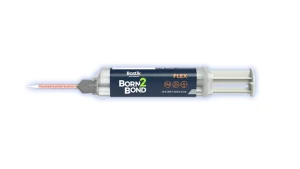 |
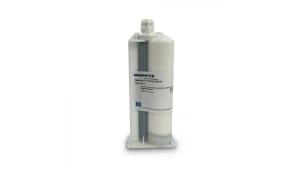
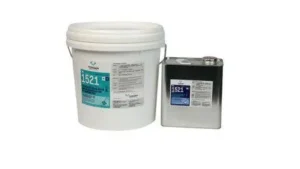
| Momentive two-part silicone RTV210 A/B | Tonsan® 1521 White Two Part Silicone Adhesive | Bostik Born2Bond™ Flex flexo-elastic, two-part, instant adhesive |
2. Mixing complexity leads to process inconsistency
One of the most persistent challenges with two-part silicone adhesives is the need for precise mixing before application. These adhesives consist of a base and a curing agent that must be blended in an exact ratio—often 1:1 or 10:1—for proper curing. If the components are not mixed evenly or thoroughly, the result can be unpredictable curing behavior, incomplete bond formation, or surface tackiness. In manual operations, this introduces a high potential for operator errors and increases the risk of product defects—especially in mass production environments where speed and consistency are critical.
How Prostech’s Dispensing Solution Overcomes This Limitation
Instead of relying on manual mixing, Prostech offers a range of automated mixing and dispensing systems tailored to your production requirements. These machines are designed to meter, mix, and dispense two-part silicone adhesives with high accuracy and repeatability. Whether you’re bonding small electronic components or applying sealant in large-volume industrial assemblies, we provide scalable systems—from benchtop units to fully integrated robotic solutions.
For small-scale operations or simple repair/assembly tasks, Prostech supplies manual applicator guns compatible with dual-cartridge packaging. These applicator tools allow for controlled, clean, and efficient dispensing without the need for complex equipment—making them ideal for prototyping, lab use, or low-volume production.
By automating or simplifying the mixing and dispensing process, you eliminate common sources of error and material waste. Our solutions help ensure consistent output, reduce operator dependency, and minimize downtime associated with cleaning or clogged nozzles. Most importantly, systems can be customized to match your workflow—including variable flow rates, programmable shot volumes, and compatibility with various material formats.
2K Meter-mixing and Dispensing System
3. Short pot life leads to material waste
Two-part silicone adhesives typically begin curing as soon as the components are mixed. This means there’s a limited “pot life”—often ranging from a few minutes to half an hour—before the material becomes too viscous to apply or starts to gel. In fast-paced or unpredictable production environments, this narrow working window can cause significant adhesive waste. Partially used materials must often be discarded, especially when downtime or application delays occur. The result is not only increased material cost but also lower overall efficiency as operators rush to apply the adhesive before it hardens.
How Prostech’s Dispensing Solution Minimizes Waste and Maximizes Efficiency
To address this limitation, Prostech offers intelligent metering and dispensing systems that deliver precisely the amount of adhesive needed—when and where you need it. Unlike manual mixing setups that often require over-preparing materials to ensure availability, our machines dispense mixed adhesive on demand, helping you avoid premature curing and unnecessary waste.
4. Poor surface compatibility with two-part silicone adhesive
Traditional two-part silicone adhesives often struggle to bond effectively to low surface energy materials such as polypropylene (PP), polyethylene (PE), or certain coated metals. These substrates typically resist wetting, making it difficult for conventional silicones to form a strong and durable bond without the use of primers or surface treatments like plasma treatment. As a result, additional processing steps are required—slowing down production and increasing labor, material, and equipment costs. In industries where a wide variety of substrates are used, this becomes an even greater challenge, complicating inventory and limiting design flexibility.
How Prostech’s Adhesive Systems Eliminate the Need for Primers
Prostech offers a range of advanced silicone and silane-modified polymer adhesives specifically formulated for strong adhesion to a wide variety of surfaces—even those traditionally considered “difficult-to-bond.” Our solutions are engineered with enhanced wetting capabilities and optimized polarity, allowing them to bond securely without the need for primers or surface activation steps.
However, for critical applications where enhanced bond strength or long-term durability is required, we provide a full suite of surface treatment solutions, including:
- Specialized primers: Tailored for your adhesive chemistry and substrate type to promote stronger interfacial adhesion.
- Plasma systems: A dry, clean, and highly effective method to activate low-energy surfaces without damaging delicate components. Plasma treatment increases surface energy, improving wetting and bonding reliability—especially in electronics, medical, or optical assemblies.
Our team can support you in selecting the right combination of adhesive and pre-treatment based on your materials, bond strength requirements, and throughput goals. With these solutions in place, you gain greater design flexibility, process repeatability, and confidence in long-term product performance—all without introducing unnecessary complexity or risk. Contact us now for consultation!