

- 1. Everything you need to know about Industrial Glass Adhesive
- 1.1 What is Industrial Glass Adhesive?
- 1.2. Classification: Selecting the Right Type of Industrial Glass Adhesives
- 1.3. Key Applications Across Industries
- 2. FAQ: Common Challenges in Industrial Glass Bonding
- 3. Why Choosing Prostech for Your Industrial Glass Adhesive Needs?
Looking for industrial-strength glue for glass bonding? Explore technical insights on UV, Epoxies, and Silicones for Industrial Glass Adhesive. 3M, Permabond, or ITW? Receive free expert consultancy on the perfect choice for manufacturers.

Source: Internet
1. Everything you need to know about Industrial Glass Adhesive
Glass is one of the most challenging substrates in the manufacturing world. It is chemically inert, smooth, and brittle. It has a significantly different Coefficient of Thermal Expansion (CTE) compared to metals or plastics.
In industrial manufacturing, especially Automotive, Electronics Vehicle (EV), and Medical Device manufacturing, finding the right industrial glass bonding adhesive is not just about adhesion. It is about long term managing stress, ensuring optical clarity, and optimizing production speed.
At Prostech, we not only bring world-class industrial adhesion to glass solutions but also customize them to your specific assembly challenges.
Not sure what type of adhesive your business needs? This article will provide a comprehensive look of Industrial Glass Adhesives, specifically its chemistry, application, and selection, etc.
1.1 What is Industrial Glass Adhesive?

Source: Internet
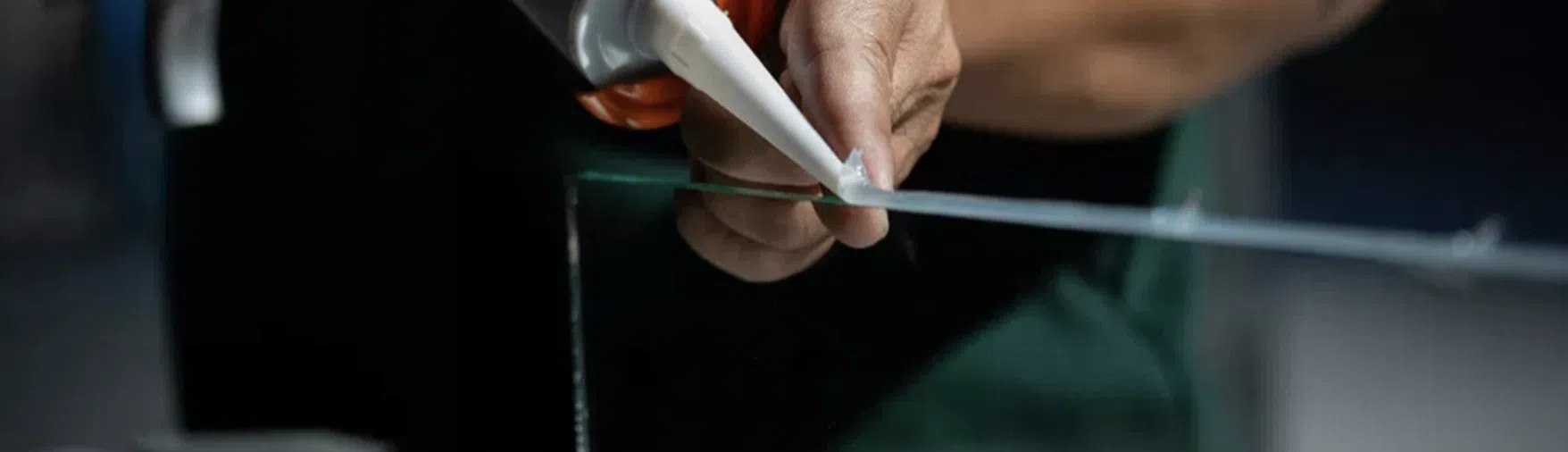
Industrial glass adhesive refers to high-performance bonding agents engineered to join glass to itself or dissimilar bonding surfaces (metal, plastic, ceramic) under rigorous conditions.
Unlike consumer-grade glues, these materials are designed to withstand the unique physics of glass, specifically:
- Extreme thermal cycling: essential for EVs and Aerospace (Read more about industrial adhesives for EVs here).
- Chemical exposure: critical for Medical devices (Read more about industrial adhesives for Medical devices here).
- High dynamic loads and vibration: vital for Railway and Marine (Read more about industrial adhesives for Rail Roof Assembly here).
- Optical clarity: fundamental for Display Assembly, and Camera (Read more about industrial adhesives for Camera bonding here).
Looking for technical advices or samples for lab testing, contact our expert teams here.
1.2. Classification: Selecting the Right Type of Industrial Glass Adhesives
Not all industrial-strength glues are created equal. Choosing the wrong type of glass adhesives may lead to thermal shock or poor surface wetting, resulting in difficult to bond situations, even failure.
Below is the absolute guideline to help you find a tailor-made adhesive for your business requirements.
1.2.1. Acrylics Adhesives

Source: Prostech
- Best for: Electronics Device Manufacturing, EV Displays, Medical Disposables.
- Mechanism: Photopolymerization (cures instantly upon exposure to UV/Visible light).
- Pros: Infinite working time, instant cure, high production throughput.
- Cons: Requires one substrate to be transparent; requires UV curing equipment.
- Prostech Insight: This is the dominant choice for glass bonding in touchscreens and camera modules.
- Expert Recommendation:
3M™ Scotch-Weld™ Structural Plastic Adhesive DP8005;
3M™ Scotch-Weld™ Low Odor Acrylic Adhesives DP810;
Devcon® Tru-Bond™ UB6500S.
1.2.2. UV Curable Acrylic
Among the broad family of Acrylics adhesives, UV Curable Acrylic subclass is the superior choice for high-precision Industrial Glass Bonding.
- Best for: Applications requiring invisibility and speed, such as Touchscreen Displays, Optical Lenses, Medical Device Assembly, and decorative glass bonding.
- Mechanism: These specialized acrylics remain liquid indefinitely until exposed to specific UV/Visible light wavelengths, triggering an instant cure. (For detailed information here.)
- Pros: Optical Perfection with invisible bond line, “Cure-on-Demand” Precision, and CTE (Coefficients of Thermal Expansion) Flexibility
- Cons: Requires at least one substrate to be transparent for light penetration; and investment in UV LED curing equipment.
- Expert Recommendation:
Everwide GA006;
Trubond UB15000
1.2.3. Epoxy Adhesives (1K & 2K)

Source: Prostech
- Best for: Aerospace, Military, and Structural Metal-to-Glass bonding.
- Mechanism: Chemical reaction (Heat cure or Mix-cure).
- Pros: Extremely high shear strength, excellent chemical resistance, low shrinkage.
- Cons: Slower cure time, rigid (can crack glass if CTE mismatch is not managed).
- Prostech Insight: Besides standard epoxies, Prostech provides specialized Toughened Epoxies (rubber-modified) with added flexibility to absorb shock and thermal stress; and Low-Outgassing Epoxies (NASA ASTM E595 compliant) to prevent volatile chemicals from fogging up sensitive lenses or sensors during operation (best for Aerospace and Optical Manufacturing)
- Expert Recommendation: Everwide JD 455-4
1.2.4. Silicones & Modified Silanes (MS Polymers)
- Best for: Railway, Marine, Renewable Energy (Solar panels), and Exterior Automotive.
- Mechanism: Moisture cure.
- Pros: High flexibility (absorbs vibration and thermal expansion), excellent UV/Weather resistance.
- Cons: Lower structural strength compared to epoxies; longer cure times.
- Prostech Insight: Besides traditional silicones, Prostech provides specific adhesive grades that bond aggressively to coated glass (glass ceramic) without the need for messy primers.
- Expert Recommendation:
ITW SM2030
Everwide FS168W22;
Everwide FS132BL79;
1.2.5. Polyurethanes (PU)
- Best for: Automotive Manufacturing (Windshield bonding).
- Mechanism: Moisture cure.
- Pros: High impact resistance, toughness.
- Cons: Normally requires a Black Primer step to ensure strong bond and prevent UV degradation
- Expert Recommendation:
3M™ Polyurethane Glass Adhesive Sealant 590;
Gluditec PU5110;
1.3. Key Applications Across Industries
1.3.1. Electronics Manufacturing
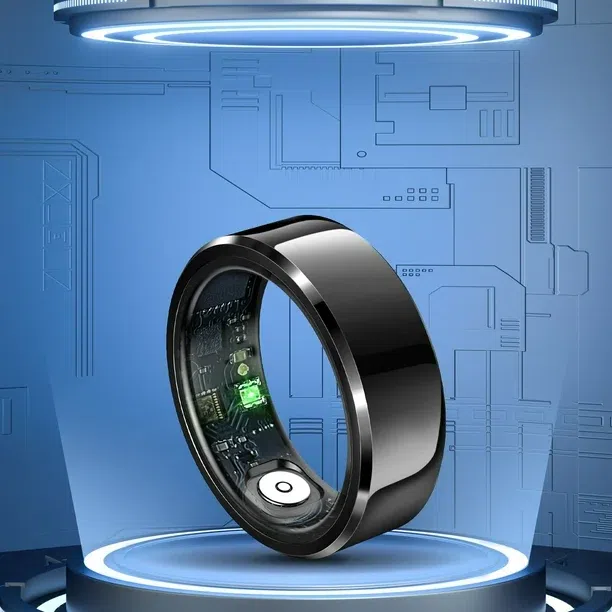
- Application: Active Alignment of Optical Sensors (LiDAR, Proximity Sensors, Facial Recognition Projectors).
- The Core Task: Position components to micron-level precision without post-process shifting.
- Adhesive Type: UV Liquid Optically Clear Adhesives (LOCA) & Precision-cure UV.

Source: Internet
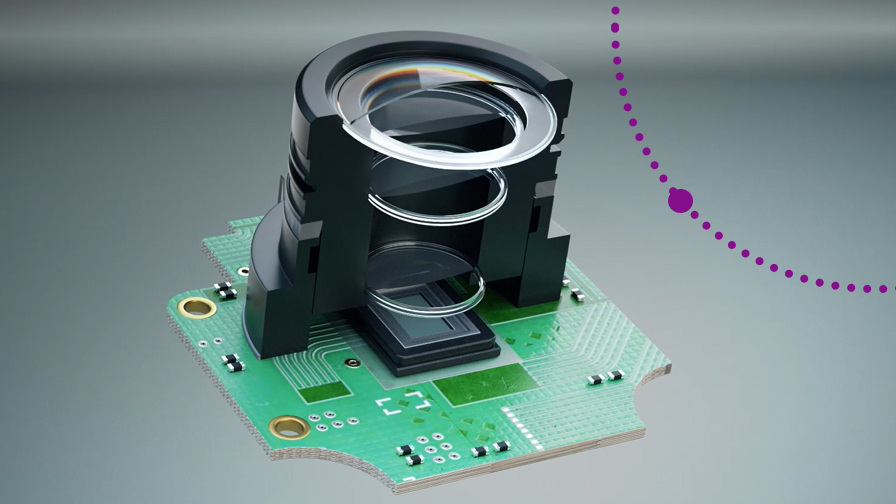
1.3.2. Camera Module Manufacturing
- Application: Lens-to-Image Sensor Bonding (Compact Camera Modules – CCM).
- The Core Task: Facilitates 6-Degrees-of-Freedom (6DoF) adjustment to achieve; prevents the lens from drifting during the hardening process; and ensures uniform focus from the center to the corners of the image.
- Adhesive Type:
1.3.3. Medical Device Manufacturing
- Application: Bond stainless steel cannulas (needles) to glass syringes.
- The Core Task: Withstand harsh sterilization cycles (Gamma, Autoclave) without leaching toxins or losing seal integrity.
- Adhesive Type: ISO 10993 Certified UV Adhesives (Biocompatible).

Source: Internet
1.3.4. Renewable Energy & Construction
- Application: Seal frames and bond junction boxes to solar glass backsheets.
- The Core Task: Ensure absolute weather resistance (UV, rain, temperature) for a 20+ year outdoor service life.
- Adhesive Type: Industrial Silicones & Sealants.

Source: Internet
1.3.5. Aerospace Manufacturing
- Application: Bond multi-layer cockpit canopies and satellite solar arrays.
- The Core Task: Withstand extreme thermal shock (supersonic heat to sub-zero altitudes) and prevent “fogging” in vacuum environments.
- Adhesive Type: Low-Outgassing Epoxies (ASTM E595 compliant) & Optical Urethanes.

Source: Internet
1.3.6. Military & Defense
- Application: Laminate ballistic glass (transparent armor) and assembling Night Vision sights.
- The Core Task: Prevent delamination under bullet impact (blast mitigation) and maintain lens alignment during weapon recoil.
- Adhesive Type: High-Impact Urethanes & Dual-Cure UV Adhesives (MIL-SPEC).

Source: Internet
1.3.7. Marine & Offshore
- Application: “Direct Glaze” of large hull windows on superyachts and submersibles.
- The Core Task: Absorb massive hull twisting (torsion) in rough seas and resist saltwater corrosion.
- Adhesive Type: Marine-grade SMPs (Silane Modified Polymers) or Polyurethanes (IMO certified).

Source: Internet
1.3.8. Railway Manufacturing
- Application: Structural bonding of front windshields on High-Speed Trains.
- The Core Task: Absorb the massive “Tunnel Effect” pressure waves (at 300 km/h) without glass detachment.
- Adhesive Type: High-Modulus Polyurethanes (DIN 6701 compliant).

Source: Internet
2. FAQ: Common Challenges in Industrial Glass Bonding
2.1: How do I bond Glass to Metal without shattering the glass?
Answer: The biggest enemy is the CTE Mismatch. Metal expands faster than glass when heated.
- Solution: Do not use a rigid glue like standard cyanoacrylate (Super Glue). Use a toughened industrial glass adhesive (e.g.: modified epoxy) or a flexible one (e.g.: Silicone/MS Polymer) that allows for movement.
- Prostech Tip: We can calculate the necessary bond line thickness, and bond strength to accommodate this expansion.
2.2: Is “3M Industrial Glue” suitable for glass bonding adhesive?
Answer: Yes, but selection is key. 3M industrial glue covers a vast range.
- For structural glass-to-metal: 3M Scotch-Weld Epoxy.
- For invisible bonding: 3M UV Curable Adhesives.
- For mounting glass panels: 3M VHB Tapes are an excellent alternative to liquid adhesives for specific aesthetic applications.
Prostech is an authorized distributor of 3M and provides you free consultancy on the exact SKU.
2.3: How to prepare the glass surface for optimal industrial glass bonding?
Answer: Due to glass hydrophilic (loves water) characteristics, manufacturers must follow 3 fundamental steps to avoid contamination and increase level of adhesion to glass.
- Clean the surface thoroughly with Isopropyl Alcohol (IPA).
- Increase surface energy using Plasma treatment (especially or critical structural bonds).
- Create a chemical bridge between the inorganic glass and organic adhesive using silane primers.
3. Why Choosing Prostech for Your Industrial Glass Adhesive Needs?
Finding a glue is easy, but finding a custom-made adhesion to glass with A to Z support is a real challenge.
Prostech is not just a supplier, we are a solution provider.
3.1. Authorized Distributor of Top Brands
We provide authentic access to the world’s leading industrial adhesive manufacturers, including:
- 3M: Synonymous with innovation in 3M industrial glue and tapes.
- Momentive: Experts in high-performance silicones.
- Vietape: Leading company in customized industrial tape.
3.2. Total Solution
From expert consultancy to automated mass production, we are here to solve your industrial glass adhesive glue obstacles, contributing to an optimization in your bonding processes:
- Application Engineering: We don’t just ship bottles. We help you choose the adhesive based on your bonding surface and preferred curing adhesives.
- Validation Services: We offer in-house Testing Lab, which can perform bond strength, shear strength, peel strength, and environmental aging tests for your specific parts before mass production.
- Dispensing & Curing Equipment: We supply and integrate automated glass bonding applications, namely robots, valves, and UV lamps needed to apply the adhesive consistently, ensuring your glass bonding process is scalable.
Contact us here for a custom-made solution for your manufacturing!
3.3. Local Inventory, Global Standards
In high-stakes manufacturing such as Medical Devices, Railway or Aerospace Manufacturing, a strong glass industrial adhesive glue is not enough. The adhesive must comply with rigorous safety and environmental standards.
At Prostech, we supply industrial glass adhesives backed by the critical certifications your Quality Assurance (QA) team demands:
- ISO 10993 (Medical Class VI): Mandatory for Medical Devices. This ensures the adhesive is biocompatible (non-toxic, non-irritating) when in contact with body fluids or tissue. (more details here)
- UL 94 V-0 (Flammability): Critical for Electronics & EVs. This certifies that the adhesive will self-extinguish within 10 seconds in case of fire, preventing flame spread in battery packs or control units. (more details here)
- DIN 6701 / EN 45545 (Railway): The “Gold Standard” for Rail Manufacturing. This certifies the adhesive’s structural integrity and fire safety behavior for bonding components on passenger trains. (more details here)
- RoHS & REACH Compliant: This is essential for Global Export. Ensures the adhesive is free from restricted hazardous substances (Lead, Mercury, etc.), allowing your finished products to be sold in the EU and US markets. (more details here)
We don’t just ship the product; we provide the full Technical Data Package, including Certificates of Conformance (CoC), Technical Data Sheet, and etc. needed for your audit trails.
Ready to optimize your assembly? Contact Prostech Technical Team today for:
- Detailed technical datasheets
- Free adhesive selection consultation
- Industrial samples & Lab Testing
- Customization & Global Shipping
We are here to validate the perfect industrial glass bonding for your glass applications.
Prostech – Your Trusted Partner in Specialty Materials & Advanced Manufacturing Solutions.